

Gesamtpreis (1 Artikel Artikel):
Versandziel:

schultz anne catrin (64 Ergebnisse)
Direkt zu den wichtigsten Suchergebnissen
Suchfilter
Produktart
- Alle Product Types
- Bücher (64)
- Magazine & Zeitschriften (Keine weiteren Ergebnisse entsprechen dieser Verfeinerung)
- Comics (Keine weiteren Ergebnisse entsprechen dieser Verfeinerung)
- Noten (Keine weiteren Ergebnisse entsprechen dieser Verfeinerung)
- Kunst, Grafik & Poster (Keine weiteren Ergebnisse entsprechen dieser Verfeinerung)
- Fotografien (Keine weiteren Ergebnisse entsprechen dieser Verfeinerung)
- Karten (Keine weiteren Ergebnisse entsprechen dieser Verfeinerung)
- Manuskripte & Papierantiquitäten (Keine weiteren Ergebnisse entsprechen dieser Verfeinerung)
Zustand Mehr dazu
Einband
- alle Einbände
- Hardcover (64)
- Softcover (Keine weiteren Ergebnisse entsprechen dieser Verfeinerung)
Weitere Eigenschaften
Sprache (2)
Gratisversand
Land des Verkäufers
Verkäuferbewertung
-
hardcover. Zustand: Very Good. Connecting readers with great books since 1972! Used books may not include companion materials, and may have some shelf wear or limited writing. We ship orders daily and Customer Service is our top priority!
-

Skidmore, Owings & Merrill, International Terminal, San Francisco International Airport
Anbieter: ThriftBooks-Dallas, Dallas, TX, USA
Verkäuferbewertung 5 von 5 Sternen

Hardcover. Zustand: Fair. No Jacket. Readable copy. Pages may have considerable notes/highlighting. ~ ThriftBooks: Read More, Spend Less.
-

Time, Space and Material: The Mechanics of Layering in Architecture
Anbieter: ThriftBooks-Dallas, Dallas, TX, USA
Verkäuferbewertung 5 von 5 Sternen
Hardcover. Zustand: Very Good. No Jacket. May have limited writing in cover pages. Pages are unmarked. ~ ThriftBooks: Read More, Spend Less.
-

Time, Space and Material : The Mechanics of Layering in Architecture
Anbieter: GreatBookPrices, Columbia, MD, USA
Verkäuferbewertung 5 von 5 Sternen
Zustand: As New. Unread book in perfect condition.
-
Zustand: As New. Unread copy in mint condition.
-

Time, Space and Material : The Mechanics of Layering in Architecture
Anbieter: GreatBookPrices, Columbia, MD, USA
Verkäuferbewertung 5 von 5 Sternen
Zustand: New.
-
Zustand: New. Brand New.
-
Zustand: As New. Unread copy in mint condition.
-
Zustand: New. Brand New.
-
Skidmore, Owings and Merrill, International Terminal, San Francisco International Airport (Opus): Opus 64
Anbieter: Anybook.com, Lincoln, Vereinigtes Königreich
Verkäuferbewertung 5 von 5 Sternen
EUR 29,33
EUR 15,32 Versand
Versand von Vereinigtes Königreich nach USAAnzahl: 1 verfügbar
In den WarenkorbZustand: Good. This is an ex-library book and may have the usual library/used-book markings inside.This book has hardback covers. In good all round condition. Dust jacket in good condition. Please note the Image in this listing is a stock photo and may not match the covers of the actual item,950grams, ISBN:9783932565649.
-
Time, Space & Material (Hardcover)
Sprache: Englisch
Verlag: Edition Axel Menges, Fellbach, 2015
ISBN 10: 3936681880 ISBN 13: 9783936681888
Anbieter: Grand Eagle Retail, Bensenville, IL, USA
Verkäuferbewertung 5 von 5 Sternen
Hardcover. Zustand: new. Hardcover. This book examines the application of the principle of layering in architecture, its mechanics, possible application and meaning. Layering is widely used in the discussions of the 20th and 21st centuries architecture but rarely defined or examined. Layering bridges the tectonics of structure and skin, offers a system for the creation of different architectural spaces over time and functions as a design principle without hierarchy. Three types of layering are identified: a chronological sedimentation of planes materializing changes over time (temporal layering), the additive sequence of spaces (spatial layering), and the stratification of individual planes (material layering). Like a palimpsest, historic cities frequently reveal temporal layering and aspects of change over time, a condition familiar to archaeologists who study layer upon layer of remnants of civilisation, including architectural remains and urban organization. In historic cities, one can read at least the most recent layers to determine a physical chronology of the city's history; contemporary architects add strata of the 21st century. Cities are composed of several layers, offering a complex understanding of time in which a view of the present includes also the perception of the past. At a building scale, layers can be part of the spatial composition, multiple elements of walls, the skin, the structure or decorative and narrative elements. Just as the position and order of geological strata contain information related to their age, formation, and origin, the position and form of architectural layers come with information about their function, intellectual scope, and provenance. The possible elements of such an architectural strategy include materials, light, water, and color as well as associations, memories, and analogies embedded in the layers or in the voids between them. Material layering is based on a perceived separation of spatial enclosures into floor, wall, and ceiling or roof elements and combinations thereof. Individual elements may consist of multiple planes fulfilling a series of specific functions. The architectural enclosure can represent the physical wrapper of a building and might transport the structure's narrative, tectonic information, cultural expression, the architect's design intent, and other topics that might be embedded. Shipping may be from multiple locations in the US or from the UK, depending on stock availability.
-
Zustand: As New. Unread copy in mint condition.
-
Zustand: New. Brand New.
-

Hardback. Zustand: New. This book examines the application of the principle of layering in architecture, its mechanics, possible application and meaning. Layering is widely used in the discussions of the 20th and 21st centuries architecture but rarely defined or examined. Layering bridges the tectonics of structure and skin, offers a system for the creation of different architectural spaces over time and functions as a design principle without hierarchy. Three types of layering are identified: a chronological sedimentation of planes materializing changes over time (temporal layering), the additive sequence of spaces (spatial layering), and the stratification of individual planes (material layering). Like a palimpsest, historic cities frequently reveal temporal layering and aspects of change over time, a condition familiar to archaeologists who study layer upon layer of remnants of civilisation, including architectural remains and urban organization. In historic cities, one can read at least the most recent layers to determine a physical chronology of the city's history; contemporary architects add strata of the 21st century. Cities are composed of several layers, offering a complex understanding of time in which a view of the present includes also the perception of the past. At a building scale, layers can be part of the spatial composition, multiple elements of walls, the skin, the structure or decorative and narrative elements. Just as the position and order of geological strata contain information related to their age, formation, and origin, the position and form of architectural layers come with information about their function, intellectual scope, and provenance. The possible elements of such an architectural strategy include materials, light, water, and color as well as associations, memories, and analogies embedded in the layers or in the voids between them. Material layering is based on a perceived separation of spatial enclosures into floor, wall, and ceiling or roof elements and combinations thereof. Individual elements may consist of multiple planes fulfilling a series of specific functions. The architectural enclosure can represent the physical wrapper of a building and might transport the structure's narrative, tectonic information, cultural expression, the architect's design intent, and other topics that might be embedded.
-

Carlo Scarpa : Layers
Anbieter: GreatBookPrices, Columbia, MD, USA
Verkäuferbewertung 5 von 5 Sternen
Zustand: New.
-
Carlo Scarpa (Hardcover)
Sprache: Englisch
Verlag: Edition Axel Menges, Fellbach, 2007
ISBN 10: 3930698145 ISBN 13: 9783930698141
Anbieter: Grand Eagle Retail, Bensenville, IL, USA
Verkäuferbewertung 5 von 5 Sternen
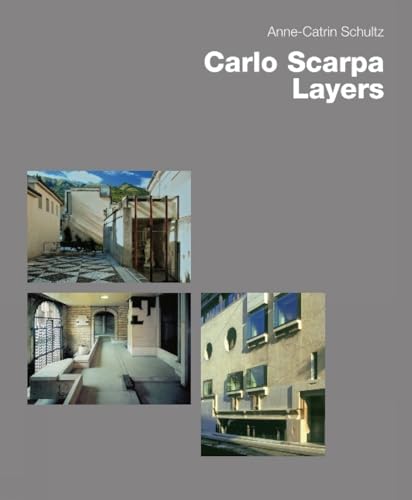
Hardcover. Zustand: new. Hardcover. In recent decades, Carlo Scarpa's relevance has been steadily on the rise. At a time when architects have to use existing city and building structures as a point of departure for their work, his oeuvre remains a source of inspiration. Buildings such as the Castelvecchio in Verona show us that architecture is capable of communicating its own history, has meaning, and develops a contemporary dynamic of its own. Scarpa's layered architecture makes visible the process of becoming and the time-related sedimentation of material and meanings. It is especially at points of transition and interface that layering becomes a narrative element that elucidates the tectonic qualities of the building. Overlaying includes leaving a record of how an object came into being -- either by means of the sediments of its history or through the intervention of the architect. In this book Anne-Catrin Schultz presents her research about the phenomenon of layering in Carlo Scarpa's architecture. Layering describes the physical composition of layers defining space as well as the parallel presence of cultural referrals and formal associations imbedded in the physical layers. Scarpa's work is an embodiment of multidimensional layering and, at the same time, a focal point for architectural movements of his time that have stratification as their theme. In most buildings, the principle of layering may be regarded as something that is part of the nature of building. Functional conditions call for planes, elements, or "layers" to provide the supporting structure, and others to protect from rain, cold or the heat of the sun. However, architectonic layering goes beyond merely fulfilling technical requirements -- the principle of layering may be used as a formative method that allows elements of different origins to be combined into a non-hierarchical whole. Layering exists in a realm of complexity and implies a capacity of being interpreted that goes beyond itself and creates references to the world at large. The first part of the book examines Scarpa's fields of influence and intellectual roots and puts them in perspective with former theories and their interpretation of architecture as layered, for example Gottfried Semper's theory of clothing. The second part displays an analysis of three major projects, Castelvecchio and Banca Popolare in Verona and the Querini Foundation in Venice. Carlo Scarpa's layered architecture makes visible the process of becoming and the time-related sedimentation of material and meanings. This book examines Scarpa's fields of influence and intellectual roots and puts them in perspective with former theories and their interpretation of architecture as layered. Shipping may be from multiple locations in the US or from the UK, depending on stock availability.
-

Carlo Scarpa : Layers
Anbieter: GreatBookPrices, Columbia, MD, USA
Verkäuferbewertung 5 von 5 Sternen
Zustand: As New. Unread book in perfect condition.
-
Carlo Scarpa: Layers
Anbieter: Anybook.com, Lincoln, Vereinigtes Königreich
Verkäuferbewertung 5 von 5 Sternen
EUR 34,47
EUR 15,32 Versand
Versand von Vereinigtes Königreich nach USAAnzahl: 1 verfügbar
In den WarenkorbZustand: Good. This is an ex-library book and may have the usual library/used-book markings inside.This book has hardback covers. In good all round condition. Dust jacket in good condition. Please note the Image in this listing is a stock photo and may not match the covers of the actual item,1100grams, ISBN:9783930698141.
-
Carlo Scarpa: Layers
Anbieter: Anybook.com, Lincoln, Vereinigtes Königreich
Verkäuferbewertung 5 von 5 Sternen
EUR 34,94
EUR 15,32 Versand
Versand von Vereinigtes Königreich nach USAAnzahl: 1 verfügbar
In den WarenkorbZustand: Good. This is an ex-library book and may have the usual library/used-book markings inside.This book has hardback covers. In good all round condition. Dust jacket in good condition. Please note the Image in this listing is a stock photo and may not match the covers of the actual item,1200grams, ISBN:9783930698141.
-

Time, Space and Material
Anbieter: Rarewaves.com USA, London, LONDO, Vereinigtes Königreich
Verkäuferbewertung 5 von 5 Sternen
EUR 54,76
Versand gratis
Versand von Vereinigtes Königreich nach USAAnzahl: 8 verfügbar
In den WarenkorbHardback. Zustand: New. This book examines the application of the principle of layering in architecture, its mechanics, possible application and meaning. Layering is widely used in the discussions of the 20th and 21st centuries architecture but rarely defined or examined. Layering bridges the tectonics of structure and skin, offers a system for the creation of different architectural spaces over time and functions as a design principle without hierarchy. Three types of layering are identified: a chronological sedimentation of planes materializing changes over time (temporal layering), the additive sequence of spaces (spatial layering), and the stratification of individual planes (material layering). Like a palimpsest, historic cities frequently reveal temporal layering and aspects of change over time, a condition familiar to archaeologists who study layer upon layer of remnants of civilisation, including architectural remains and urban organization. In historic cities, one can read at least the most recent layers to determine a physical chronology of the city's history; contemporary architects add strata of the 21st century. Cities are composed of several layers, offering a complex understanding of time in which a view of the present includes also the perception of the past. At a building scale, layers can be part of the spatial composition, multiple elements of walls, the skin, the structure or decorative and narrative elements. Just as the position and order of geological strata contain information related to their age, formation, and origin, the position and form of architectural layers come with information about their function, intellectual scope, and provenance. The possible elements of such an architectural strategy include materials, light, water, and color as well as associations, memories, and analogies embedded in the layers or in the voids between them. Material layering is based on a perceived separation of spatial enclosures into floor, wall, and ceiling or roof elements and combinations thereof. Individual elements may consist of multiple planes fulfilling a series of specific functions. The architectural enclosure can represent the physical wrapper of a building and might transport the structure's narrative, tectonic information, cultural expression, the architect's design intent, and other topics that might be embedded.
-

Hardback. Zustand: New. In recent decades, Carlo Scarpa's relevance has been steadily on the rise. At a time when architects have to use existing city and building structures as a point of departure for their work, his oeuvre remains a source of inspiration. Buildings such as the Castelvecchio in Verona show us that architecture is capable of communicating its own history, has meaning, and develops a contemporary dynamic of its own. Scarpa's layered architecture makes visible the process of becoming and the time-related sedimentation of material and meanings. It is especially at points of transition and interface that layering becomes a narrative element that elucidates the tectonic qualities of the building. Overlaying includes leaving a record of how an object came into being -- either by means of the sediments of its history or through the intervention of the architect. In this book Anne-Catrin Schultz presents her research about the phenomenon of layering in Carlo Scarpa's architecture. Layering describes the physical composition of layers defining space as well as the parallel presence of cultural referrals and formal associations imbedded in the physical layers. Scarpa's work is an embodiment of multidimensional layering and, at the same time, a focal point for architectural movements of his time that have stratification as their theme. In most buildings, the principle of layering may be regarded as something that is part of the nature of building. Functional conditions call for planes, elements, or "layers" to provide the supporting structure, and others to protect from rain, cold or the heat of the sun. However, architectonic layering goes beyond merely fulfilling technical requirements -- the principle of layering may be used as a formative method that allows elements of different origins to be combined into a non-hierarchical whole. Layering exists in a realm of complexity and implies a capacity of being interpreted that goes beyond itself and creates references to the world at large. The first part of the book examines Scarpa's fields of influence and intellectual roots and puts them in perspective with former theories and their interpretation of architecture as layered, for example Gottfried Semper's theory of clothing. The second part displays an analysis of three major projects, Castelvecchio and Banca Popolare in Verona and the Querini Foundation in Venice.
-

Carlo Scarpa
Anbieter: Rarewaves.com USA, London, LONDO, Vereinigtes Königreich
Verkäuferbewertung 5 von 5 Sternen
EUR 56,53
Versand gratis
Versand von Vereinigtes Königreich nach USAAnzahl: 1 verfügbar
In den WarenkorbHardback. Zustand: New. In recent decades, Carlo Scarpa's relevance has been steadily on the rise. At a time when architects have to use existing city and building structures as a point of departure for their work, his oeuvre remains a source of inspiration. Buildings such as the Castelvecchio in Verona show us that architecture is capable of communicating its own history, has meaning, and develops a contemporary dynamic of its own. Scarpa's layered architecture makes visible the process of becoming and the time-related sedimentation of material and meanings. It is especially at points of transition and interface that layering becomes a narrative element that elucidates the tectonic qualities of the building. Overlaying includes leaving a record of how an object came into being -- either by means of the sediments of its history or through the intervention of the architect. In this book Anne-Catrin Schultz presents her research about the phenomenon of layering in Carlo Scarpa's architecture. Layering describes the physical composition of layers defining space as well as the parallel presence of cultural referrals and formal associations imbedded in the physical layers. Scarpa's work is an embodiment of multidimensional layering and, at the same time, a focal point for architectural movements of his time that have stratification as their theme. In most buildings, the principle of layering may be regarded as something that is part of the nature of building. Functional conditions call for planes, elements, or "layers" to provide the supporting structure, and others to protect from rain, cold or the heat of the sun. However, architectonic layering goes beyond merely fulfilling technical requirements -- the principle of layering may be used as a formative method that allows elements of different origins to be combined into a non-hierarchical whole. Layering exists in a realm of complexity and implies a capacity of being interpreted that goes beyond itself and creates references to the world at large. The first part of the book examines Scarpa's fields of influence and intellectual roots and puts them in perspective with former theories and their interpretation of architecture as layered, for example Gottfried Semper's theory of clothing. The second part displays an analysis of three major projects, Castelvecchio and Banca Popolare in Verona and the Querini Foundation in Venice.
-

Real and Fake in Architecture : Close to the Original, Far from Authenticity?
Anbieter: GreatBookPrices, Columbia, MD, USA
Verkäuferbewertung 5 von 5 Sternen
Zustand: New.
-
Real and Fake in Architecture (Hardcover)
Sprache: Englisch
Verlag: Edition Axel Menges, Fellbach, 2020
ISBN 10: 3869050187 ISBN 13: 9783869050188
Anbieter: Grand Eagle Retail, Bensenville, IL, USA
Verkäuferbewertung 5 von 5 Sternen
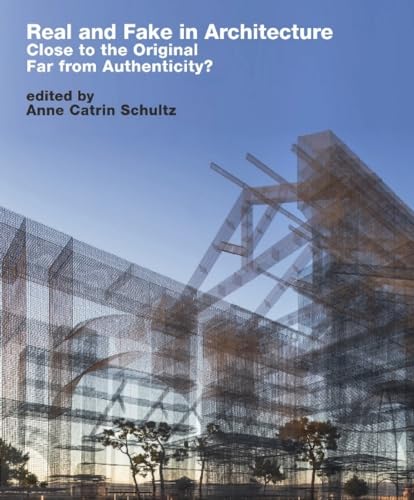
Hardcover. Zustand: new. Hardcover. The condition of "fake" and "real" in architecture is rarely publicly discussed nor has it encountered broad journalistic or scholarly attention. This book explores the realm of truth, authenticity and fakery in architecture, providing a timely collection of analytical essays and projects. Photographers, writers and architects share their understanding and speculations about a broad range of spaces and concepts all searching for common ground between real and imagined, function and story. The authors challenge our perception of "authenticity " through the examination of built and simulated environments, architectural fiction, theatric illusions and mannerist trickery. They examine the notion that the principle of Sullivans "form follows function" contains a paradox caused by the ambiguity and complexity of architectural expression. Buildings are perceived through an individuals personal experiences while also being interpreted along broader cultural values. The works shown reveal that under scrutiny, any built environment harbors both, reveals moments of truth, deception and ambiguity all of it partially in the eye of the beholder.The diverse contributions shed light on unexpected identities in architecture inviting criticalthought about our built environment analog and digital. The goal of this publication goes beyond unmasking deception in architecture, it aims at unfolding time-lines and revealing the layerednature of people and places. The images and essays reveal our contemporary condition and let collective and individual narratives unfold, a range of truths in themselves. Expanding from the discussion about truthful materiality and tectonics, this book provides an understanding ofreal, authentic, and fake in urbanism and architecture. Anne-Catrin Schultz studied architecture inStuttgart and Florence. Following post-doctoral research at the Massachusetts Institute of Technoloyin Boston, she worked for several years with Turnbull Griffin Haesloop and Skidmore, Owings & Merrill in San Francisco. While developing her own practice, she has taught at the University of California in Berkeley, the California College of the Arts and the Academy of Arts University in San Francisco. In 2013 she joined the Department of Architecture at Wentworth Institute of Technology in Boston. Shipping may be from multiple locations in the US or from the UK, depending on stock availability.
-

Real and Fake in Architecture : Close to the Original, Far from Authenticity?
Anbieter: GreatBookPrices, Columbia, MD, USA
Verkäuferbewertung 5 von 5 Sternen
Zustand: As New. Unread book in perfect condition.
-
Carlo Scarpa--Layers
Anbieter: Ria Christie Collections, Uxbridge, Vereinigtes Königreich
Verkäuferbewertung 5 von 5 Sternen
EUR 43,64
EUR 13,70 Versand
Versand von Vereinigtes Königreich nach USAAnzahl: 2 verfügbar
In den WarenkorbZustand: New. In.
-
Carlo Scarpa: Layers
Sprache: Englisch
Verlag: Edition Axel Menges 2007-09-12, 2007
ISBN 10: 3930698145 ISBN 13: 9783930698141
Anbieter: Chiron Media, Wallingford, Vereinigtes Königreich
Verkäuferbewertung 5 von 5 Sternen
EUR 39,73
EUR 17,72 Versand
Versand von Vereinigtes Königreich nach USAAnzahl: 2 verfügbar
In den WarenkorbHardcover. Zustand: New.
-

Carlo Scarpa : Layers
Anbieter: GreatBookPricesUK, Woodford Green, Vereinigtes Königreich
Verkäuferbewertung 5 von 5 Sternen
EUR 42,66
EUR 17,15 Versand
Versand von Vereinigtes Königreich nach USAAnzahl: 12 verfügbar
In den WarenkorbZustand: New.
-

Hardback. Zustand: New. The condition of "fake" and "real" in architecture is rarely publicly discussed nor has it encountered broad journalistic or scholarly attention. This book explores the realm of truth, authenticity and fakery in architecture, providing a timely collection of analytical essays and projects. Photographers, writers and architects share their understanding and speculations about a broad range of spaces and concepts all searching for common ground between real and imagined, function and story. The authors challenge our perception of "authenticity " through the examination of built and simulated environments, architectural fiction, theatric illusions and mannerist trickery. They examine the notion that the principle of Sullivans "form follows function" contains a paradox caused by the ambiguity and complexity of architectural expression. Buildings are perceived through an individuals personal experiences while also being interpreted along broader cultural values. The works shown reveal that under scrutiny, any built environment harbors both, reveals moments of truth, deception and ambiguity all of it partially in the eye of the beholder.The diverse contributions shed light on unexpected identities in architecture inviting criticalthought about our built environment analog and digital. The goal of this publication goes beyond unmasking deception in architecture, it aims at unfolding time-lines and revealing the layerednature of people and places. The images and essays reveal our contemporary condition and let collective and individual narratives unfold, a range of truths in themselves. Expanding from the discussion about truthful materiality and tectonics, this book provides an understanding ofreal, authentic, and fake in urbanism and architecture. Anne-Catrin Schultz studied architecture inStuttgart and Florence. Following post-doctoral research at the Massachusetts Institute of Technoloyin Boston, she worked for several years with Turnbull Griffin Haesloop and Skidmore, Owings and Merrill in San Francisco. While developing her own practice, she has taught at the University of California in Berkeley, the California College of the Arts and the Academy of Arts University in San Francisco. In 2013 she joined the Department of Architecture at Wentworth Institute of Technology in Boston.
-
Carlo Scarpa
Anbieter: PBShop.store UK, Fairford, GLOS, Vereinigtes Königreich
Verkäuferbewertung 4 von 5 Sternen

EUR 52,37
EUR 7,73 Versand
Versand von Vereinigtes Königreich nach USAAnzahl: 2 verfügbar
In den WarenkorbHRD. Zustand: New. New Book. Shipped from UK. Established seller since 2000.

