

Gesamtpreis (1 Artikel Artikel):
Versandziel:

shivakumar sujai (30 Ergebnisse)
Direkt zu den wichtigsten Suchergebnissen
Suchfilter
Produktart
- Alle Product Types
- Bücher (30)
- Magazine & Zeitschriften (Keine weiteren Ergebnisse entsprechen dieser Verfeinerung)
- Comics (Keine weiteren Ergebnisse entsprechen dieser Verfeinerung)
- Noten (Keine weiteren Ergebnisse entsprechen dieser Verfeinerung)
- Kunst, Grafik & Poster (Keine weiteren Ergebnisse entsprechen dieser Verfeinerung)
- Fotografien (Keine weiteren Ergebnisse entsprechen dieser Verfeinerung)
- Karten (Keine weiteren Ergebnisse entsprechen dieser Verfeinerung)
- Manuskripte & Papierantiquitäten (Keine weiteren Ergebnisse entsprechen dieser Verfeinerung)
Zustand Mehr dazu
- Neu (23)
- Wie Neu, Sehr Gut oder Gut Bis Sehr Gut (5)
- Gut oder Befriedigend (2)
- Ausreichend oder Schlecht (Keine weiteren Ergebnisse entsprechen dieser Verfeinerung)
- Wie beschrieben (Keine weiteren Ergebnisse entsprechen dieser Verfeinerung)
Einband
Weitere Eigenschaften
- Erstausgabe (Keine weiteren Ergebnisse entsprechen dieser Verfeinerung)
- Signiert (Keine weiteren Ergebnisse entsprechen dieser Verfeinerung)
- Schutzumschlag (Keine weiteren Ergebnisse entsprechen dieser Verfeinerung)
- Angebotsfoto (7)
- Keine Print-on-Demand Angebote (28)
Sprache (1)
Gratisversand
Land des Verkäufers
Verkäuferbewertung
-

The Samaritan's Dilemma : The Political Economy of Development Aid
Sprache: Englisch
Verlag: Oxford University Press, Incorporated, 2005
ISBN 10: 0199278857 ISBN 13: 9780199278855
Anbieter: Better World Books, Mishawaka, IN, USA
Verkäuferbewertung 5 von 5 Sternen

Zustand: Good. Pages intact with minimal writing/highlighting. The binding may be loose and creased. Dust jackets/supplements are not included. Stock photo provided. Product includes identifying sticker. Better World Books: Buy Books. Do Good.
-

Flexible Electronics for Security, Manufacturing, and Growth in the United States : Summary of a Symposium
Anbieter: GreatBookPrices, Columbia, MD, USA
Verkäuferbewertung 5 von 5 Sternen
Zustand: As New. Unread book in perfect condition.
-

Flexible Electronics for Security, Manufacturing, and Growth in the United States : Summary of a Symposium
Anbieter: GreatBookPrices, Columbia, MD, USA
Verkäuferbewertung 5 von 5 Sternen
Zustand: New.
-
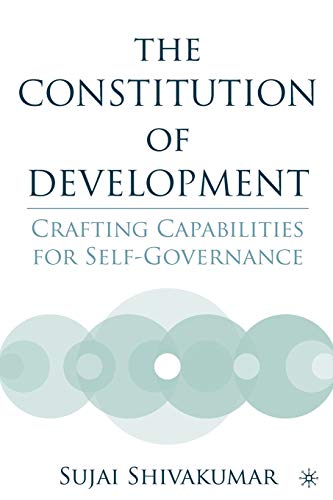
Zustand: New. pp. 192.
-
The Constitution of Development
Anbieter: Majestic Books, Hounslow, Vereinigtes Königreich
Verkäuferbewertung 4 von 5 Sternen

EUR 34,23
EUR 7,54 Versand
Versand von Vereinigtes Königreich nach USAAnzahl: 1 verfügbar
In den WarenkorbZustand: New. pp. 192.
-
The Constitution of Development
Anbieter: Biblios, Frankfurt am main, HESSE, Deutschland
Verkäuferbewertung 4 von 5 Sternen
Zustand: New. pp. 192.
-

Flexible Electronics for Security, Manufacturing, and Growth in the United States: Summary of a Symposium
Anbieter: Revaluation Books, Exeter, Vereinigtes Königreich
Verkäuferbewertung 5 von 5 Sternen
EUR 35,41
EUR 11,59 Versand
Versand von Vereinigtes Königreich nach USAAnzahl: 1 verfügbar
In den WarenkorbPaperback. Zustand: Brand New. 140 pages. 9.00x6.00x0.50 inches. In Stock.
-
THE CONSTITUTION OF DEVELOPMENT: CRAFTING CAPABILITIES FOR SELF-GOVERNANCE
Anbieter: Basi6 International, Irving, TX, USA
Verkäuferbewertung 5 von 5 Sternen
Zustand: Brand New. New. US edition. Expediting shipping for all USA and Europe orders excluding PO Box. Excellent Customer Service.
-

Innovation, Diversity, and the SBIR / STTR Programs: Summary of a Workshop
Anbieter: Revaluation Books, Exeter, Vereinigtes Königreich
Verkäuferbewertung 5 von 5 Sternen
EUR 36,29
EUR 11,59 Versand
Versand von Vereinigtes Königreich nach USAAnzahl: 1 verfügbar
In den WarenkorbPaperback. Zustand: Brand New. 94 pages. 9.25x6.25x0.25 inches. In Stock.
-
Flexible Electronics for Security, Manufacturing, and Growth in the United States : Summary of a Symposium
Anbieter: GreatBookPricesUK, Woodford Green, Vereinigtes Königreich
Verkäuferbewertung 5 von 5 Sternen
EUR 33,98
EUR 17,39 Versand
Versand von Vereinigtes Königreich nach USAAnzahl: 2 verfügbar
In den WarenkorbZustand: New.
-

Flexible Electronics for Security, Manufacturing, and Growth in the United States : Summary of a Symposium
Anbieter: GreatBookPricesUK, Woodford Green, Vereinigtes Königreich
Verkäuferbewertung 5 von 5 Sternen
EUR 36,75
EUR 17,39 Versand
Versand von Vereinigtes Königreich nach USAAnzahl: 2 verfügbar
In den WarenkorbZustand: As New. Unread book in perfect condition.
-

India's Changing Innovation System: Achievements, Challenges, and Opportunities for Cooperation: Report of a Symposium
Anbieter: GuthrieBooks, Spring Branch, TX, USA
Verkäuferbewertung 5 von 5 Sternen
Hardcover. Zustand: New. Hardcover. New. Interior clean and unmarked. Tight binding.
-
Flexible Electronics for Security, Manufacturing, and Growth in the United States: Summary of a Symposium
Anbieter: Revaluation Books, Exeter, Vereinigtes Königreich
Verkäuferbewertung 5 von 5 Sternen
EUR 53,93
EUR 11,59 Versand
Versand von Vereinigtes Königreich nach USAAnzahl: 1 verfügbar
In den WarenkorbPaperback. Zustand: Brand New. 140 pages. 9.00x6.00x0.50 inches. In Stock.
-

The Samaritan's Dilemma
Sprache: Englisch
Verlag: Oxford University Press, GB, 2005
ISBN 10: 0199278857 ISBN 13: 9780199278855
Anbieter: Rarewaves.com USA, London, LONDO, Vereinigtes Königreich
Verkäuferbewertung 5 von 5 Sternen
EUR 71,16
Versand gratis
Versand von Vereinigtes Königreich nach USAAnzahl: Mehr als 20 verfügbar
In den WarenkorbPaperback. Zustand: New. What's wrong with foreign aid? Many policymakers, aid practitioners, and scholars have called into question its ability to increase economic growth, alleviate poverty, or promote social development. At the macro level, only tenuous links between development aid and improved living conditions have been found. At the micro level, only a few programs outlast donor support and even fewer appear to achieve lasting improvements. The authors of this book argue that much of aid's failure is related to the institutions that structure its delivery. These institutions govern the complex relationships between the main actors in the aid delivery system and often generate a series of perverse incentives that promote inefficient and unsustainable outcomes. In their analysis, the authors apply the theoretical insights of the new institutional economics to several settings. First, they investigate the institutions of Sida, the Swedish aid agency, to analyze how that aid agency's institutions can produce incentives inimical to desired outcomes, contrary to the desires of its own staff. Second, the authors use cases from India, a country with low aid dependence, and Zambia, a country with high aid dependence, to explore how institutions on the ground in recipient countries also mediate the effectiveness of aid. Throughout the book, the authors offer suggestions about how to improve aid's effectiveness. These suggestions include how to structure evaluations in order to improve outcomes, how to employ agency staff to gain from their on-the-ground experience, and how to engage stakeholders as "owners" in the design, resource mobilization, learning, and evaluation processes of development assistance programs.
-
Samaritan's Dilemma : The Political Economy of Development Aid
Anbieter: GreatBookPrices, Columbia, MD, USA
Verkäuferbewertung 5 von 5 Sternen
Zustand: New.
-
The Samaritan's Dilemma: The Political Economy of Development Aid
Sprache: Englisch
Verlag: Oxford University Press, USA, 2005
ISBN 10: 0199278857 ISBN 13: 9780199278855
Anbieter: Studibuch, Stuttgart, Deutschland
Verkäuferbewertung 5 von 5 Sternen
paperback. Zustand: Befriedigend. 286 Seiten; 9780199278855.4 Gewicht in Gramm: 1.
-

Samaritan's Dilemma : The Political Economy of Development Aid
Anbieter: GreatBookPrices, Columbia, MD, USA
Verkäuferbewertung 5 von 5 Sternen
Zustand: As New. Unread book in perfect condition.
-
The Constitution of Development: Crafting Capabilities for Self-Governance
Anbieter: Chiron Media, Wallingford, Vereinigtes Königreich
Verkäuferbewertung 5 von 5 Sternen
EUR 57,02
EUR 17,96 Versand
Versand von Vereinigtes Königreich nach USAAnzahl: 10 verfügbar
In den WarenkorbPF. Zustand: New.
-

Zustand: New. pp. 192.
-
Samaritan's Dilemma : The Political Economy of Development Aid
Anbieter: GreatBookPricesUK, Woodford Green, Vereinigtes Königreich
Verkäuferbewertung 5 von 5 Sternen
EUR 65,46
EUR 17,39 Versand
Versand von Vereinigtes Königreich nach USAAnzahl: Mehr als 20 verfügbar
In den WarenkorbZustand: New.
-
The Samaritan's Dilemma. The Political Economy of Development Aid.
Anbieter: Kennys Bookshop and Art Galleries Ltd., Galway, GY, Irland
Verkäuferbewertung 5 von 5 Sternen
EUR 73,93
EUR 10,50 Versand
Versand von Irland nach USAAnzahl: Mehr als 20 verfügbar
In den WarenkorbZustand: New. The authors argue that much of foreign aid's failure is related to the institutions that structure its delivery. They explore the workings of Sida and find that Sida's institutions lead to perverse incentives and poor outcomes in the field. The authors offer concrete suggestions about how to improve aid's effectiveness. Num Pages: 288 pages, 2 boxes, 1 table and numerous figures. BIC Classification: KCM; KCP. Category: (P) Professional & Vocational. Dimension: 233 x 156 x 20. Weight in Grams: 418. . 2005. Paperback. . . . .
-
The Constitution Of Development: Crafting Capabilities For Self-governance
Anbieter: Revaluation Books, Exeter, Vereinigtes Königreich
Verkäuferbewertung 5 von 5 Sternen
EUR 78,49
EUR 11,59 Versand
Versand von Vereinigtes Königreich nach USAAnzahl: 2 verfügbar
In den WarenkorbPaperback. Zustand: Brand New. illustrated edition. 192 pages. 9.00x6.00x0.50 inches. In Stock.
-
Samaritan's Dilemma : The Political Economy of Development Aid
Anbieter: GreatBookPricesUK, Woodford Green, Vereinigtes Königreich
Verkäuferbewertung 5 von 5 Sternen
EUR 72,02
EUR 17,39 Versand
Versand von Vereinigtes Königreich nach USAAnzahl: Mehr als 20 verfügbar
In den WarenkorbZustand: As New. Unread book in perfect condition.
-
The Constitution Of Development: Crafting Capabilities For Self-governance
Anbieter: Revaluation Books, Exeter, Vereinigtes Königreich
Verkäuferbewertung 5 von 5 Sternen
EUR 80,30
EUR 11,59 Versand
Versand von Vereinigtes Königreich nach USAAnzahl: 2 verfügbar
In den WarenkorbHardcover. Zustand: Brand New. 180 pages. 9.25x6.25x0.50 inches. In Stock.
-

AID, INCENTIVES, ANS SUSTAINABILITY Main Report
Sprache: Englisch
Verlag: Sida Studies in Evalution, 2001
Anbieter: Butterfly Books GmbH & Co. KG, Herzebrock-Clarholz, Deutschland
Verkäuferbewertung 5 von 5 Sternen
Softcover, Kartoniert. Zustand: Sehr gut. Zustand: Mängelexemplar, Einband mit leichten Gebrauchsspuren, Seiten mit leichten Gebrauchsspuren, Seitenschnitt oben leicht fleckig bzw. stockfleckig, ansonsten SEHR GUTER Zustand! HC1-216-1/8-00780354 Sprache: Englisch Gewicht in Gramm: 727.
-
The Samaritan's Dilemma. The Political Economy of Development Aid.
Anbieter: Kennys Bookstore, Olney, MD, USA
Verkäuferbewertung 5 von 5 Sternen
Zustand: New. The authors argue that much of foreign aid's failure is related to the institutions that structure its delivery. They explore the workings of Sida and find that Sida's institutions lead to perverse incentives and poor outcomes in the field. The authors offer concrete suggestions about how to improve aid's effectiveness. Num Pages: 288 pages, 2 boxes, 1 table and numerous figures. BIC Classification: KCM; KCP. Category: (P) Professional & Vocational. Dimension: 233 x 156 x 20. Weight in Grams: 418. . 2005. Paperback. . . . . Books ship from the US and Ireland.
-
The Samaritan's Dilemma: The Political Economy of Development Aid
Anbieter: BennettBooksLtd, Los Angeles, CA, USA
Verkäuferbewertung 5 von 5 Sternen
Paperback. Zustand: New. In shrink wrap. Looks like an interesting title!
-

The Samaritan's Dilemma
Sprache: Englisch
Verlag: Oxford University Press, GB, 2005
ISBN 10: 0199278857 ISBN 13: 9780199278855
Anbieter: Rarewaves.com UK, London, Vereinigtes Königreich
Verkäuferbewertung 5 von 5 Sternen
EUR 66,16
EUR 75,36 Versand
Versand von Vereinigtes Königreich nach USAAnzahl: Mehr als 20 verfügbar
In den WarenkorbPaperback. Zustand: New. What's wrong with foreign aid? Many policymakers, aid practitioners, and scholars have called into question its ability to increase economic growth, alleviate poverty, or promote social development. At the macro level, only tenuous links between development aid and improved living conditions have been found. At the micro level, only a few programs outlast donor support and even fewer appear to achieve lasting improvements. The authors of this book argue that much of aid's failure is related to the institutions that structure its delivery. These institutions govern the complex relationships between the main actors in the aid delivery system and often generate a series of perverse incentives that promote inefficient and unsustainable outcomes. In their analysis, the authors apply the theoretical insights of the new institutional economics to several settings. First, they investigate the institutions of Sida, the Swedish aid agency, to analyze how that aid agency's institutions can produce incentives inimical to desired outcomes, contrary to the desires of its own staff. Second, the authors use cases from India, a country with low aid dependence, and Zambia, a country with high aid dependence, to explore how institutions on the ground in recipient countries also mediate the effectiveness of aid. Throughout the book, the authors offer suggestions about how to improve aid's effectiveness. These suggestions include how to structure evaluations in order to improve outcomes, how to employ agency staff to gain from their on-the-ground experience, and how to engage stakeholders as "owners" in the design, resource mobilization, learning, and evaluation processes of development assistance programs.
-
The Constitution of Development
Anbieter: Majestic Books, Hounslow, Vereinigtes Königreich
Verkäuferbewertung 4 von 5 Sternen
EUR 78,22
EUR 7,54 Versand
Versand von Vereinigtes Königreich nach USAAnzahl: 4 verfügbar
In den WarenkorbZustand: New. Print on Demand pp. 192.
-
The Constitution of Development
Anbieter: Biblios, Frankfurt am main, HESSE, Deutschland
Verkäuferbewertung 4 von 5 Sternen
Zustand: New. PRINT ON DEMAND pp. 192.

