

Gesamtpreis (1 Artikel Artikel):
Versandziel:

vostokova e a (32 Ergebnisse)
Direkt zu den wichtigsten Suchergebnissen
Suchfilter
Produktart
- Alle Product Types
- Bücher (32)
- Magazine & Zeitschriften (Keine weiteren Ergebnisse entsprechen dieser Verfeinerung)
- Comics (Keine weiteren Ergebnisse entsprechen dieser Verfeinerung)
- Noten (Keine weiteren Ergebnisse entsprechen dieser Verfeinerung)
- Kunst, Grafik & Poster (Keine weiteren Ergebnisse entsprechen dieser Verfeinerung)
- Fotografien (Keine weiteren Ergebnisse entsprechen dieser Verfeinerung)
- Karten (Keine weiteren Ergebnisse entsprechen dieser Verfeinerung)
- Manuskripte & Papierantiquitäten (Keine weiteren Ergebnisse entsprechen dieser Verfeinerung)
Zustand Mehr dazu
- Neu (24)
- Wie Neu, Sehr Gut oder Gut Bis Sehr Gut (4)
- Gut oder Befriedigend (3)
- Ausreichend oder Schlecht (Keine weiteren Ergebnisse entsprechen dieser Verfeinerung)
- Wie beschrieben (1)
Weitere Eigenschaften
- Erstausgabe (Keine weiteren Ergebnisse entsprechen dieser Verfeinerung)
- Signiert (Keine weiteren Ergebnisse entsprechen dieser Verfeinerung)
- Schutzumschlag (2)
- Angebotsfoto (12)
- Keine Print-on-Demand Angebote (22)
Sprache (2)
Gratisversand
- Kostenloser Versand nach USA (Keine weiteren Ergebnisse entsprechen dieser Verfeinerung)
Land des Verkäufers
Verkäuferbewertung
-

Guidebook for Determining the Lithological Composition of Surface Deposits and Depth of Occurrence of Ground Waters
Verlag: Israel Program for Scientific Translation, Jerusalem, 1966
Anbieter: Autumn Leaves, Allentown, PA, USA
Verkäuferbewertung 5 von 5 Sternen

Stiff Cardboard Folder. Zustand: Very Good. Zustand des Schutzumschlags: No Dust Jacket. First English Language. A pleasing copy of this tome. It has been bound into stiff cardboard covers, and subsequentally been withdrawn from a college library. I would not have guessed this from the title, but this is a botanical book more than anything else, and it is concerned with the European portion of the then-USSR. Pretty specialized. Library markings are few, and the book is pristine.; Ex-library.
-
Guidebook for Determining the Lithological Composition of Surface Deposits and Depth of Occurrence of Ground Waters
Verlag: Jerusalem: Israel Program for Scientific Translations 1st edn, 1966
Anbieter: G. & J. CHESTERS, TAMWORTH, Vereinigtes Königreich
Verkäuferbewertung 5 von 5 Sternen
EUR 22,72
EUR 8,07 Versand
Versand von Vereinigtes Königreich nach USAAnzahl: 1 verfügbar
In den WarenkorbHardcover. Zustand: Very Good. Dust Jacket Included. 247 pages, a very good hardback in a very good dust-jacket, with 263 figures.
-
Guidebook for Determining the Lithogical Composition of Surface Deposits and Depth of Occurance of Ground Waters State Geological Committee of the USSR All-Union Scientific Research Institue of Hydrogeology and Engineering Geology (VSEGINGEO). Translated from Russian
Verlag: Israel Program for Scientific Translations 1966, 1966
Anbieter: Hard to Find Books NZ (Internet) Ltd., Dunedin, OTAGO, Neuseeland
Verbandsmitglied: IOBA
Verkäuferbewertung 5 von 5 Sternen
Imperial octavo hardcover (VG) in d/w (VG); all our specials have minimal description to keep listing them viable. They are at least reading copies, complete and in reasonable condition, but usually secondhand; frequently they are superior examples.Ordering more than one book will reduce your overall postage cost.
-
Guidebook for Determining the Lithological Composition of Surface Deposits and Depth of Occurrence of Ground Waters
Anbieter: N. Fagin Books, Chicago, IL, USA
Verkäuferbewertung 5 von 5 Sternen
Hardcover. Zustand: Good. 1966. Botany, Geology. US Dept. of Agriculture/National Science Foundation, Washington, D.C. Israel Program for Scientific Translations. Ex-library wrappers bound in boards. Good, clean text 247p. Plus chart.
-

Vegetation Dynamics of Mongolia (Geobotany, 26)
Anbieter: Ria Christie Collections, Uxbridge, Vereinigtes Königreich
Verkäuferbewertung 5 von 5 Sternen
EUR 163,58
EUR 13,80 Versand
Versand von Vereinigtes Königreich nach USAAnzahl: Mehr als 20 verfügbar
In den WarenkorbZustand: New. In.
-

Vegetation Dynamics of Mongolia (Geobotany)
Anbieter: Ria Christie Collections, Uxbridge, Vereinigtes Königreich
Verkäuferbewertung 5 von 5 Sternen
EUR 163,58
EUR 13,80 Versand
Versand von Vereinigtes Königreich nach USAAnzahl: Mehr als 20 verfügbar
In den WarenkorbZustand: New. In.
-
Vegetation Dynamics of Mongolia
Anbieter: GreatBookPricesUK, Woodford Green, Vereinigtes Königreich
Verkäuferbewertung 5 von 5 Sternen
EUR 163,56
EUR 17,28 Versand
Versand von Vereinigtes Königreich nach USAAnzahl: Mehr als 20 verfügbar
In den WarenkorbZustand: New.
-

Vegetation Dynamics of Mongolia
Anbieter: GreatBookPrices, Columbia, MD, USA
Verkäuferbewertung 5 von 5 Sternen
EUR 180,33
EUR 2,30 Versand
Versand innerhalb von USAAnzahl: Mehr als 20 verfügbar
In den WarenkorbZustand: New.
-
Vegetation Dynamics of Mongolia
Anbieter: GreatBookPrices, Columbia, MD, USA
Verkäuferbewertung 5 von 5 Sternen
EUR 181,31
EUR 2,30 Versand
Versand innerhalb von USAAnzahl: Mehr als 20 verfügbar
In den WarenkorbZustand: As New. Unread book in perfect condition.
-
Vegetation Dynamics of Mongolia
Anbieter: GreatBookPrices, Columbia, MD, USA
Verkäuferbewertung 5 von 5 Sternen
Zustand: New.
-
Vegetation Dynamics of Mongolia
Anbieter: GreatBookPrices, Columbia, MD, USA
Verkäuferbewertung 5 von 5 Sternen
Zustand: As New. Unread book in perfect condition.
-

Vegetation Dynamics of Mongolia
Anbieter: GreatBookPricesUK, Woodford Green, Vereinigtes Königreich
Verkäuferbewertung 5 von 5 Sternen
EUR 181,00
EUR 17,28 Versand
Versand von Vereinigtes Königreich nach USAAnzahl: Mehr als 20 verfügbar
In den WarenkorbZustand: As New. Unread book in perfect condition.
-
Vegetation Dynamics of Mongolia
Sprache: Englisch
Verlag: Kluwer Academic Publishers, 1999
ISBN 10: 0792355822 ISBN 13: 9780792355823
Anbieter: Kennys Bookshop and Art Galleries Ltd., Galway, GY, Irland
Verkäuferbewertung 5 von 5 Sternen
Zustand: New. . 1999. 1999th Edition. Hardcover. . . . .
-
Zustand: New. pp. 252.
-
Taschenbuch. Zustand: Neu. Vegetation Dynamics of Mongolia | P. D. Gunin (u. a.) | Taschenbuch | viii | Englisch | 2011 | Springer Netherland | EAN 9789048151745 | Verantwortliche Person für die EU: Springer Verlag GmbH, Tiergartenstr. 17, 69121 Heidelberg, juergen[dot]hartmann[at]springer[dot]com | Anbieter: preigu.
-

Vegetation Dynamics of Mongolia
Sprache: Englisch
Verlag: Springer Netherlands, Springer, 1999
ISBN 10: 0792355822 ISBN 13: 9780792355823
Anbieter: AHA-BUCH GmbH, Einbeck, Deutschland
Verkäuferbewertung 5 von 5 Sternen
Buch. Zustand: Neu. Druck auf Anfrage Neuware - Printed after ordering - Mongolia is an expansive land-locked country, tilted by tectonic forces to the North, that experiences extremes of continental climate. Moisture-carrying wind currents are scarce so that the land has extended highs and lows in its environment. Culturally the people are mostly nomadic, having been sustained for centuries by an economy based on domestic livestock grazing. There is a saying that, `As the noses go, so goes Mongolia', referring to the domesticated grazing noses of sheep, goats, camels, yaks or horses, and wild ungulates such as gazelles. The vast fenceless steppes of Mongolia furnish the vegetation for grazing. With such extremes in climate it is clear that the vegetation must be resilient and dynamic to cope with the dictates of its extremely harsh environments. Pollen profiles from lakes, plant macrofossils and other data over the last 15,000 years show the dynamic nature of Mongolian vegetation. Currently Mongolian society is experiencing much human-driven economic development which increases pressure on its vegetation. The Great Khural Laws of 1995 forcefully addressed such environmental concerns with the expanded establishment of National Reserves and Parks. But continued effort and vigilance must be expended to insure that Mongolian society will continue to be sustained by its vegetation. This book highlights work such as conserving and restoring plant diversity in various ecosystems and makes recommendations for sustaining the vegetation basis of the nomadic Mongolian society.
-
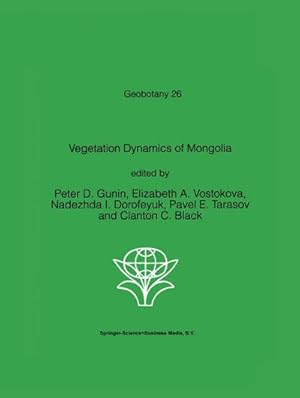
Vegetation Dynamics of Mongolia
Sprache: Englisch
Verlag: Springer Netherlands, Springer Netherlands, 2011
ISBN 10: 9048151740 ISBN 13: 9789048151745
Anbieter: AHA-BUCH GmbH, Einbeck, Deutschland
Verkäuferbewertung 5 von 5 Sternen
Taschenbuch. Zustand: Neu. Druck auf Anfrage Neuware - Printed after ordering - Mongolia is an expansive land-locked country, tilted by tectonic forces to the North, that experiences extremes of continental climate. Moisture-carrying wind currents are scarce so that the land has extended highs and lows in its environment. Culturally the people are mostly nomadic, having been sustained for centuries by an economy based on domestic livestock grazing. There is a saying that, `As the noses go, so goes Mongolia', referring to the domesticated grazing noses of sheep, goats, camels, yaks or horses, and wild ungulates such as gazelles. The vast fenceless steppes of Mongolia furnish the vegetation for grazing. With such extremes in climate it is clear that the vegetation must be resilient and dynamic to cope with the dictates of its extremely harsh environments. Pollen profiles from lakes, plant macrofossils and other data over the last 15,000 years show the dynamic nature of Mongolian vegetation. Currently Mongolian society is experiencing much human-driven economic development which increases pressure on its vegetation. The Great Khural Laws of 1995 forcefully addressed such environmental concerns with the expanded establishment of National Reserves and Parks. But continued effort and vigilance must be expended to insure that Mongolian society will continue to be sustained by its vegetation. This book highlights work such as conserving and restoring plant diversity in various ecosystems and makes recommendations for sustaining the vegetation basis of the nomadic Mongolian society.
-
Zustand: Sehr gut. Zustand: Sehr gut | Sprache: Englisch | Produktart: Bücher | Mongolia is an expansive land-locked country, tilted by tectonic forces to the North, that experiences extremes of continental climate. Moisture-carrying wind currents are scarce so that the land has extended highs and lows in its environment. Culturally the people are mostly nomadic, having been sustained for centuries by an economy based on domestic livestock grazing. There is a saying that, `As the noses go, so goes Mongolia', referring to the domesticated grazing noses of sheep, goats, camels, yaks or horses, and wild ungulates such as gazelles. The vast fenceless steppes of Mongolia furnish the vegetation for grazing. With such extremes in climate it is clear that the vegetation must be resilient and dynamic to cope with the dictates of its extremely harsh environments. Pollen profiles from lakes, plant macrofossils and other data over the last 15,000 years show the dynamic nature of Mongolian vegetation. Currently Mongolian society is experiencing much human-driven economic development which increases pressure on its vegetation. The Great Khural Laws of 1995 forcefully addressed such environmental concerns with the expanded establishment of National Reserves and Parks. But continued effort and vigilance must be expended to insure that Mongolian society will continue to be sustained by its vegetation. This book highlights work such as conserving and restoring plant diversity in various ecosystems and makes recommendations for sustaining the vegetation basis of the nomadic Mongolian society.
-
Vegetation Dynamics of Mongolia (Geobotany)
Anbieter: Revaluation Books, Exeter, Vereinigtes Königreich
Verkäuferbewertung 5 von 5 Sternen
EUR 236,94
EUR 14,40 Versand
Versand von Vereinigtes Königreich nach USAAnzahl: 2 verfügbar
In den WarenkorbPaperback. Zustand: Brand New. 233 pages. 11.02x8.27x0.57 inches. In Stock.
-
Vegetation Dynamics of Mongolia
Sprache: Englisch
Verlag: Kluwer Academic Publishers, 1999
ISBN 10: 0792355822 ISBN 13: 9780792355823
Anbieter: Kennys Bookstore, Olney, MD, USA
Verkäuferbewertung 5 von 5 Sternen
Zustand: New. . 1999. 1999th Edition. Hardcover. . . . . Books ship from the US and Ireland.
-
Zustand: New. pp. 252.
-
Vegetation Dynamics of Mongolia
Anbieter: Majestic Books, Hounslow, Vereinigtes Königreich
Verkäuferbewertung 4 von 5 Sternen

EUR 290,44
EUR 7,49 Versand
Versand von Vereinigtes Königreich nach USAAnzahl: 1 verfügbar
In den WarenkorbZustand: New. pp. 252 68:B&W 7 x 10 in or 254 x 178 mm Case Laminate on White w/Gloss Lam.
-
Vegetation Dynamics of Mongolia (eng)
Anbieter: Brook Bookstore On Demand, Napoli, NA, Italien
Verkäuferbewertung 3 von 5 Sternen

EUR 126,26
EUR 6,80 Versand
Versand von Italien nach USAAnzahl: Mehr als 20 verfügbar
In den WarenkorbZustand: new. Questo è un articolo print on demand.
-

Vegetation Dynamics of Mongolia
Sprache: Englisch
Verlag: Springer Netherlands Mrz 1999, 1999
ISBN 10: 0792355822 ISBN 13: 9780792355823
Anbieter: BuchWeltWeit Ludwig Meier e.K., Bergisch Gladbach, Deutschland
Verkäuferbewertung 5 von 5 Sternen
Buch. Zustand: Neu. This item is printed on demand - it takes 3-4 days longer - Neuware -Mongolia is an expansive land-locked country, tilted by tectonic forces to the North, that experiences extremes of continental climate. Moisture-carrying wind currents are scarce so that the land has extended highs and lows in its environment. Culturally the people are mostly nomadic, having been sustained for centuries by an economy based on domestic livestock grazing. There is a saying that, `As the noses go, so goes Mongolia', referring to the domesticated grazing noses of sheep, goats, camels, yaks or horses, and wild ungulates such as gazelles. The vast fenceless steppes of Mongolia furnish the vegetation for grazing. With such extremes in climate it is clear that the vegetation must be resilient and dynamic to cope with the dictates of its extremely harsh environments. Pollen profiles from lakes, plant macrofossils and other data over the last 15,000 years show the dynamic nature of Mongolian vegetation. Currently Mongolian society is experiencing much human-driven economic development which increases pressure on its vegetation. The Great Khural Laws of 1995 forcefully addressed such environmental concerns with the expanded establishment of National Reserves and Parks. But continued effort and vigilance must be expended to insure that Mongolian society will continue to be sustained by its vegetation. This book highlights work such as conserving and restoring plant diversity in various ecosystems and makes recommendations for sustaining the vegetation basis of the nomadic Mongolian society. 252 pp. Englisch.
-
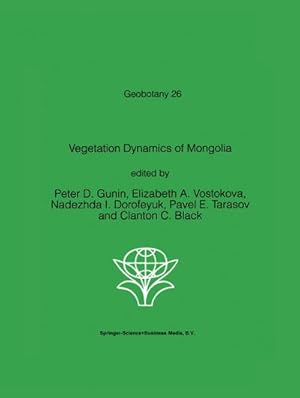
Vegetation Dynamics of Mongolia
Sprache: Englisch
Verlag: Springer Netherlands Apr 2011, 2011
ISBN 10: 9048151740 ISBN 13: 9789048151745
Anbieter: BuchWeltWeit Ludwig Meier e.K., Bergisch Gladbach, Deutschland
Verkäuferbewertung 5 von 5 Sternen
Taschenbuch. Zustand: Neu. This item is printed on demand - it takes 3-4 days longer - Neuware -Mongolia is an expansive land-locked country, tilted by tectonic forces to the North, that experiences extremes of continental climate. Moisture-carrying wind currents are scarce so that the land has extended highs and lows in its environment. Culturally the people are mostly nomadic, having been sustained for centuries by an economy based on domestic livestock grazing. There is a saying that, `As the noses go, so goes Mongolia', referring to the domesticated grazing noses of sheep, goats, camels, yaks or horses, and wild ungulates such as gazelles. The vast fenceless steppes of Mongolia furnish the vegetation for grazing. With such extremes in climate it is clear that the vegetation must be resilient and dynamic to cope with the dictates of its extremely harsh environments. Pollen profiles from lakes, plant macrofossils and other data over the last 15,000 years show the dynamic nature of Mongolian vegetation. Currently Mongolian society is experiencing much human-driven economic development which increases pressure on its vegetation. The Great Khural Laws of 1995 forcefully addressed such environmental concerns with the expanded establishment of National Reserves and Parks. But continued effort and vigilance must be expended to insure that Mongolian society will continue to be sustained by its vegetation. This book highlights work such as conserving and restoring plant diversity in various ecosystems and makes recommendations for sustaining the vegetation basis of the nomadic Mongolian society. 252 pp. Englisch.
-

EUR 136,16
EUR 48,99 Versand
Versand von Deutschland nach USAAnzahl: Mehr als 20 verfügbar
In den WarenkorbZustand: New. Dieser Artikel ist ein Print on Demand Artikel und wird nach Ihrer Bestellung fuer Sie gedruckt. Mongolia is an expansive land-locked country, tilted by tectonic forces to the North, that experiences extremes of continental climate. Moisture-carrying wind currents are scarce so that the land has extended highs and lows in its environment. Culturally.
-

EUR 136,16
EUR 48,99 Versand
Versand von Deutschland nach USAAnzahl: Mehr als 20 verfügbar
In den WarenkorbZustand: New. Dieser Artikel ist ein Print on Demand Artikel und wird nach Ihrer Bestellung fuer Sie gedruckt. Mongolia is an expansive land-locked country, tilted by tectonic forces to the North, that experiences extremes of continental climate. Moisture-carrying wind currents are scarce so that the land has extended highs and lows in its environment. Culturally.
-
Buch. Zustand: Neu. Vegetation Dynamics of Mongolia | P. D. Gunin (u. a.) | Buch | viii | Englisch | 1999 | Springer | EAN 9780792355823 | Verantwortliche Person für die EU: Springer Verlag GmbH, Tiergartenstr. 17, 69121 Heidelberg, juergen[dot]hartmann[at]springer[dot]com | Anbieter: preigu Print on Demand.
-

Vegetation Dynamics of Mongolia
Sprache: Englisch
Verlag: Springer Netherlands, Springer Mär 1999, 1999
ISBN 10: 0792355822 ISBN 13: 9780792355823
Anbieter: buchversandmimpf2000, Emtmannsberg, BAYE, Deutschland
Verkäuferbewertung 5 von 5 Sternen
Buch. Zustand: Neu. This item is printed on demand - Print on Demand Titel. Neuware -Mongolia is an expansive land-locked country, tilted by tectonic forces to the North, that experiences extremes of continental climate. Moisture-carrying wind currents are scarce so that the land has extended highs and lows in its environment. Culturally the people are mostly nomadic, having been sustained for centuries by an economy based on domestic livestock grazing. There is a saying that, `As the noses go, so goes Mongolia', referring to the domesticated grazing noses of sheep, goats, camels, yaks or horses, and wild ungulates such as gazelles. The vast fenceless steppes of Mongolia furnish the vegetation for grazing. With such extremes in climate it is clear that the vegetation must be resilient and dynamic to cope with the dictates of its extremely harsh environments.Pollen profiles from lakes, plant macrofossils and other data over the last 15,000 years show the dynamic nature of Mongolian vegetation. Currently Mongolian society is experiencing much human-driven economic development which increases pressure on its vegetation. The Great Khural Laws of 1995 forcefully addressed such environmental concerns with the expanded establishment of National Reserves and Parks. But continued effort and vigilance must be expended to insure that Mongolian society will continue to be sustained by its vegetation. This book highlights work such as conserving and restoring plant diversity in various ecosystems and makes recommendations for sustaining the vegetation basis of the nomadic Mongolian society.Springer-Verlag GmbH, Tiergartenstr. 17, 69121 Heidelberg 252 pp. Englisch.
-

Vegetation Dynamics of Mongolia
Sprache: Englisch
Verlag: Springer Netherlands, Springer Netherlands Apr 2011, 2011
ISBN 10: 9048151740 ISBN 13: 9789048151745
Anbieter: buchversandmimpf2000, Emtmannsberg, BAYE, Deutschland
Verkäuferbewertung 5 von 5 Sternen
Taschenbuch. Zustand: Neu. This item is printed on demand - Print on Demand Titel. Neuware -Mongolia is an expansive land-locked country, tilted by tectonic forces to the North, that experiences extremes of continental climate. Moisture-carrying wind currents are scarce so that the land has extended highs and lows in its environment. Culturally the people are mostly nomadic, having been sustained for centuries by an economy based on domestic livestock grazing. There is a saying that, `As the noses go, so goes Mongolia', referring to the domesticated grazing noses of sheep, goats, camels, yaks or horses, and wild ungulates such as gazelles. The vast fenceless steppes of Mongolia furnish the vegetation for grazing. With such extremes in climate it is clear that the vegetation must be resilient and dynamic to cope with the dictates of its extremely harsh environments. Pollen profiles from lakes, plant macrofossils and other data over the last 15,000 years show the dynamic nature of Mongolian vegetation. Currently Mongolian society is experiencing much human-driven economic development which increases pressure on its vegetation. The Great Khural Laws of 1995 forcefully addressed such environmental concerns with the expanded establishment of National Reserves and Parks. But continued effort and vigilance must be expended to insure that Mongolian society will continue to be sustained by its vegetation. This book highlights work such as conserving and restoring plant diversity in various ecosystems and makes recommendations for sustaining the vegetation basis of the nomadic Mongolian society.Springer Verlag GmbH, Tiergartenstr. 17, 69121 Heidelberg 252 pp. Englisch.


